
Andrew Pease (Russell Investments) & Xinling Han (JANA Investment Advisers)discuss non-correlated assets in managed accounts, including the role bonds, equities, gold, & private markets can play in a portfolio.
Global equities have experienced unprecedented growth over the past couple of years, as they ride the wave of demand coming from the big themes of artificial intelligence (AI), energy, and data centres. Many of today’s investment opportunities that leverage these themes can be accessed through factor and thematic investing.
It’s a view supported by Sue Lee, CFA — APAC Head of Index Investment Strategy at S&P Dow Jones Indices — who believes there is a strong growth narrative for investments, which provides investors with many opportunities.
“Today, the wide availability of data and specialised indices empowers investors to build portfolios beyond just broad-based markets, incorporating specific factors and thematics. This provides investors with significant new opportunities,” says Sue.
So, what is factor investing? According to Jamie Hannah — Deputy Head of Investments and Capital Markets at VanEck — factor investing (also known as smart beta or rules-based investing) is an approach that targets specific characteristics — called factors — that explain differences in security returns and risk, rather than weighting investments solely by market capitalisation. It combines elements of active and passive investing by using transparent, rules-based indices to target long-term drivers of return backed by verifiable research.

By Jayson Forrest
Billy Leung
Investment Strategist
Global X
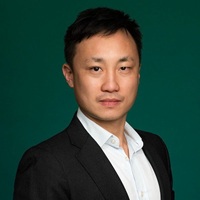
Jamie Hannah
Deputy Head of Investments & Capital Markets
VanEck

Sue Lee, CFA APAC
Head Index Investment Strategy
S&P Dow Jones Indices

Aaron Viscayno
Bus Dev Manager, Investment Products
ASX
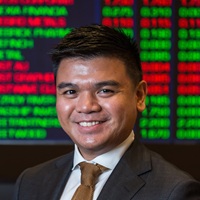
Continued.....
Speaking at a session titled, ‘Global investing: Reaching the high return opportunities’ at the 2026 IMAP Independent Thought Conference, Jamie says investment factors are identifiable, persistent drivers of risk and return that are supported by empirical evidence.
MSCI has identified seven long-term performance factors and has created an index for each. They are:
- Growth — measures expansion in a company’s sales and earnings over time.
- Value — relatively inexpensive stocks.
- Quality — financially healthy companies.
- Momentum — stocks with upward price trends.
- Size — smaller companies.
- Low volatility — stable, lower-risk stocks.
- High yield — cash flow paid out by companies.
Factors are distinct return drivers that advisers combine to build or tilt a client’s portfolio. Advisers typically use factors as one part of a broader toolkit alongside traditional asset allocation (like stocks and bonds) and geographic or sector diversification to tailor a portfolio to a client’s specific goals and risk tolerance.
Today, the wide availability of data and specialised indices empowers investors to build portfolios beyond just broad-based markets, incorporating specific factors and thematics. This provides investors with significant new opportunities
Practical applications
To showcase how an adviser might use factors in a portfolio, Jamie highlights three factors — growth, value, and quality — as examples.
He explains: “Growth investing focuses on identifying companies poised for rapid revenue and earnings expansion, often driven by innovation, market disruption or evolving consumer preferences. Growth is about growing revenue, including how fast a company can grow.
“In comparison, value is almost completely opposite. It looks at how cheap a company is, compared to its peers. Value is categorised as a ‘pro-cyclical’ factor, meaning it tends to benefit during periods of economic expansion.
“The quality factor is known for its defensive characteristics. Quality companies are about: a high return on equity, stable year-on-year earnings growth, and low debt. These companies have been shown to be resilient in the past by falling less in a downturn and recovering to previous highs faster than other regimes.”
Since the millennium, all of the major factors — quality, momentum, value, size — have outperformed the MSCI World ex Australia Index. However, factors don’t always outperform. They go through cycles and the cycles are linked to economic conditions
Why factor investing?
According to VanEck, investors should consider factor investing because it offers a systematic, cost-effective way to target specific return drivers and improve portfolio outcomes across changing market conditions without relying on market timing.
“Since the millennium, all of the major factors — quality, momentum, value, size — have outperformed the MSCI World ex Australia Index. However, factors don’t always outperform. They go through cycles and the cycles are linked to economic conditions,” says Jamie.
Jamie refers to four economic cycles — expansion, slowdown, contraction, and recovery. Looking at data over a 20-year period from the ISM Manufacturing Purchasing Managers’ Index (PMI), Jamie says it shows how each of the factors have performed over that period.
For example, in the recovery phase, quality averages around 10.94 per cent and in the expansion phase, at around 15.14 per cent. “Quality tends to fall less in economic environments that are unfavourable for companies, and they bounce back faster.”
In comparison, growth in the recovery phase averages 24.71 per cent and 25.71 per cent in the expansion phase. “Growth absolutely outperforms when you’re in the expansion and recovery part of the economic cycle.”
However, Jamie qualifies these results over the past 25 years by saying the market has experienced an extended bull market, with a lot of growth but not much profitability coming from some sectors, like technology.
“This highlights the importance of weighing up economic conditions when thinking about factors in relation to portfolio construction. For example, value has had an amazing 12 months this year — an average of 30 per cent on value companies. But the value factor did lag for many years before that.”
Timing matters with thematic ETFs because concentrated mega trends experience sharp sentiment cycles, valuation swings, and uneven adoption timelines. Even when a theme is real, buying late or selling during drawdowns can sharply reduce actual investor returns compared to the fund’s headline performance
A mix of active, passive and smart beta
Jamie believes the best way to approach factor investing is through a mix of active, passive and smart beta in a portfolio. He says a key consideration for investors is whether their active manager benchmark hugs.
He explains: “If the manager is actually getting a similar return to a quality or value factor, then you’re probably better off buying an ETF for a considerably lower basis point fee. And the fact that most active managers are underperforming over the long-term, means they are trying to take on idiosyncratic risk (the risk tied to a single company, asset, or narrow group of assets, rather than the broader market) against the index.
“That means active managers need to take bigger bets against the index to try and succeed. So, if they are just tracking a value factor, you’re better off buying the ETF. And that’s why we’re seeing a lot of disruption in the industry.”
This uptake in ETFs is supported by research from VanEck. Jamie refers to the 2026 VanEck Australian Smart Beta Survey, which reveals that 96 per cent of Australian advisers are either considering or using ETFs — a 74 per cent increase over the last 12-18 months. He attributes this growth to reduced total portfolio costs and changes to portfolio strategies.
This highlights the importance of weighing up economic conditions when thinking about factors in relation to portfolio construction. For example, value has had an amazing 12 months this year — an average of 30 per cent on value companies. But the value factor did lag for many years before that
Developed and emerging market economies
Jamie adds that factors work best in developed market economies. He says that’s because developed markets — like the U.S., Western Europe, and Australia — tend to have similar economic cycles. This means when the U.S. is doing well, Australia is also generally doing well.
However, Jamie says this type of tied economic cycle doesn’t work as well with emerging markets. That’s because emerging market economies don’t have the same economic cycles tied together.
For example, Jamie says what happens in Brazil is not necessarily the same economic cycle in China or India. Emerging markets are on very different economic cycles and because of that, a single factor approach does not work over the long-term for emerging markets. Instead, he says emerging markets require a multi-factor approach.
We aim to create a thematic growth portfolio that is well diversified to capture different trends. We have provided a solution for the selection, timing, and sizing of thematic investments. Beyond offering 19 thematic ETFs, Global X is helping advisers decide how to hold themes within portfolios
Thematic investing
Thematic investing is another strategy investors can use to access opportunities in the market. Thematic investing targets long-term structural trends or ‘mega trends’ — such as artificial intelligence, the energy transition, or demographic shifts — by investing in companies across multiple sectors and regions that stand to benefit. Unlike traditional sector or index investing, themes cut across conventional industry boundaries to capture broader economic or social shifts.
According to Billy Leung — Investment Strategist, Australia at Global X — thematic ETFs are a portfolio of stocks that ride on thematic structural trends. However, he believes investors face three key issues when investing in thematics — selection, timing, and sizing.
1. Selection
Billy believes one of the problems facing investors is the volume of thematic ETFs available in the Australian market, which continue to rise steadily. He says there are currently over 50 thematic ETFs available, which does make it hard for investors to sort through and select the better performing ETFs.
2. Timing
While investors can be right about a theme, they can still lose money through poor timing. “Timing matters with thematic ETFs because concentrated mega trends experience sharp sentiment cycles, valuation swings, and uneven adoption timelines. Even when a theme is real, buying late or selling during drawdowns can sharply reduce actual investor returns compared to the fund’s headline performance,” says Billy.
3. Sizing
Sizing matters heavily with thematic ETFs. That’s because the narrow focus of thematic ETFs causes extreme price swings and long stretches of underperformance. As these funds bet on a single trend — like artificial intelligence, clean energy, or robotics — they lack the broad diversification of a standard index fund, meaning an oversized position can badly hurt an investor’s overall portfolio if that theme falls out of favour.
Building solutions to problems
According to Billy, Global X has responded to the challenge of solving the issues around selection, timing, and sizing for investors by building the Global X Thematic Portfolio (working with WealthSpot). This is a model portfolio that uses quantitative and AI-driven scoring from WealthSpot to select and weight thematic ETFs. So, instead of an investor manually timing and sizing individual thematic funds, the portfolio automates selection across a defined set of thematic ETFs.
To do this, Global X has developed a process that involves three models:
Model 1 — Cross Sectional Model: Machine learning ranks the stocks inside each ETF on price and volume, then rolls them up to an ETF score.
Model 2 — Factor Generation Model: Searches fundamentals of companies for new factors, keeps the strongest each month, then rolls them up to an ETF score.
Model 3 — Quant Factor Model: Scores each ETF directly on growth, earnings sentiment and price momentum, with fixed weights.
All three models are then combined into, what Global X calls the Ensemble Model, which converts each of the three model’s output into percentile ranks every month, so all three sit on a common scale, then averages them with equal weights into a single composite score.
“Effectively, our process with the Global X Thematic Portfolio starts with 19 Global X thematic ETFs, with roughly 840 underlying companies between them,” says Billy. “Every month, our three models score the universe, and their results are blended into one ranking. The highest ranked six ETFs then become the portfolio for the month, so one allocation replaces 19 separate timing and sizing decisions.”
In terms of where the portfolio is positioned today, Billy says technology leads, with Disruptive Technology ETFs at 52 per cent and FANG adding a further 21 per cent in large-cap platforms. He adds that all six holdings sit somewhere along the AI and digital build-out spectrum, from copper to chips, infrastructure and platforms. In fact, copper is the only commodity exposure, which provides the portfolio with a link to the electrification thematic without a broader miners tilt.
So, what does this mean for investors?
“We aim to create a thematic growth portfolio that is well diversified to capture different trends. We have provided a solution for the selection, timing, and sizing of thematic investments. Beyond offering 19 thematic ETFs, Global X is helping advisers decide how to hold themes within portfolios,” says Billy.
“The Global X Thematic Portfolio applies a repeatable, systematic process to timing and sizing decisions across the universe. The portfolio has been designed to sit alongside core and factor holdings in the global equity sleeve of an investor’s portfolio, not to replace them.”
About
Billy Leung is an Investment Strategist, Australia at Global X;
Sue Lee, CFA is APAC Head of Index Investment Strategy at S&P Dow Jones Indices; and
Jamie Hannah is Deputy Head of Investments and Capital Markets at VanEck.
They spoke on the topic ‘Global investing: Reaching the high return opportunities’ at the 2026 IMAP Independent Thought Conference.
The session was moderated by Aaron Viscayno — Business Development Manager, Investment Products at ASX.